

Every Seattle, WA deck reaches a point where you have to decide whether it’s worth saving or time to start fresh. The Pacific Northwest’s constant moisture, mild winters, and limited drying time push decks harder than most climates, and damage that might take a decade to develop elsewhere can show up in half that time here. Knowing when a repair makes sense and when a full deck replacement is the smarter move saves you money, stress, and potentially a safety hazard.
Signs Your Deck Just Needs a Repair
Not every problem means your deck is done. Surface-level issues like loose boards, popped fasteners, minor splintering, wobbly railings, and faded stain are all common in Seattle’s wet climate and usually fall squarely in repair territory. These are the kinds of problems that look worse than they actually are and can be fixed without touching the underlying structure.
Small areas of surface rot on individual boards can also be addressed with targeted repairs as long as the damage hasn’t spread to the framing below. If less than 20 percent of your deck shows visible wear and the joists, beams, and posts underneath are still solid, a repair is almost always the more cost-effective route.
Signs It’s Time for a Full Replacement
When damage goes beyond the surface and into the structural framing, a deck replacement starts making a lot more sense than throwing money at repairs. Widespread rot in joists, beams, or ledger boards is the biggest red flag. In Seattle’s climate, moisture works its way into framing over years of exposure, and once structural members are compromised, patching individual boards on top won’t make the deck safe.
Other warning signs include multiple leaning or shifting posts, significant sagging or bounce when you walk across the deck, and visible separation where the deck meets your home. If your deck is more than 20 years old and built from untreated lumber, the framing has likely absorbed decades of PNW moisture and a deck replacement gives you a fresh start with modern materials that will far outlast what’s currently there.
The Hidden Danger of Delaying
One of the biggest mistakes Seattle, WA homeowners make is putting off the decision too long. A deck that needs replacement doesn’t stay the same while you wait. It continues to deteriorate, and in a climate this wet, that deterioration accelerates. Rot spreads from one joist to the next, fasteners lose their grip in softened wood, and structural connections weaken with every rainy season.
Waiting also increases safety risks. A structurally compromised deck can collapse under load, especially during gatherings when more weight is concentrated in one area. If your contractor tells you the framing is failing, moving forward with a deck replacement protects both your family and your investment before a minor issue becomes a dangerous one.
How Seattle’s Climate Affects the Decision
The Pacific Northwest is uniquely tough on decks. Eight-plus months of rain, persistent dampness, morning fog, moss growth, and limited sunshine mean wood rarely gets the chance to fully dry out. This constant moisture cycle accelerates rot, mold, and structural weakening far faster than in drier climates.
Shaded decks suffer the most because they trap moisture and encourage moss and algae growth that eats away at wood over time. South-facing decks fare better but still take a beating from rain and humidity. Understanding how your specific deck’s exposure and orientation affect its condition helps you and your contractor make a more informed decision.
What a Modern Deck Replacement Looks Like
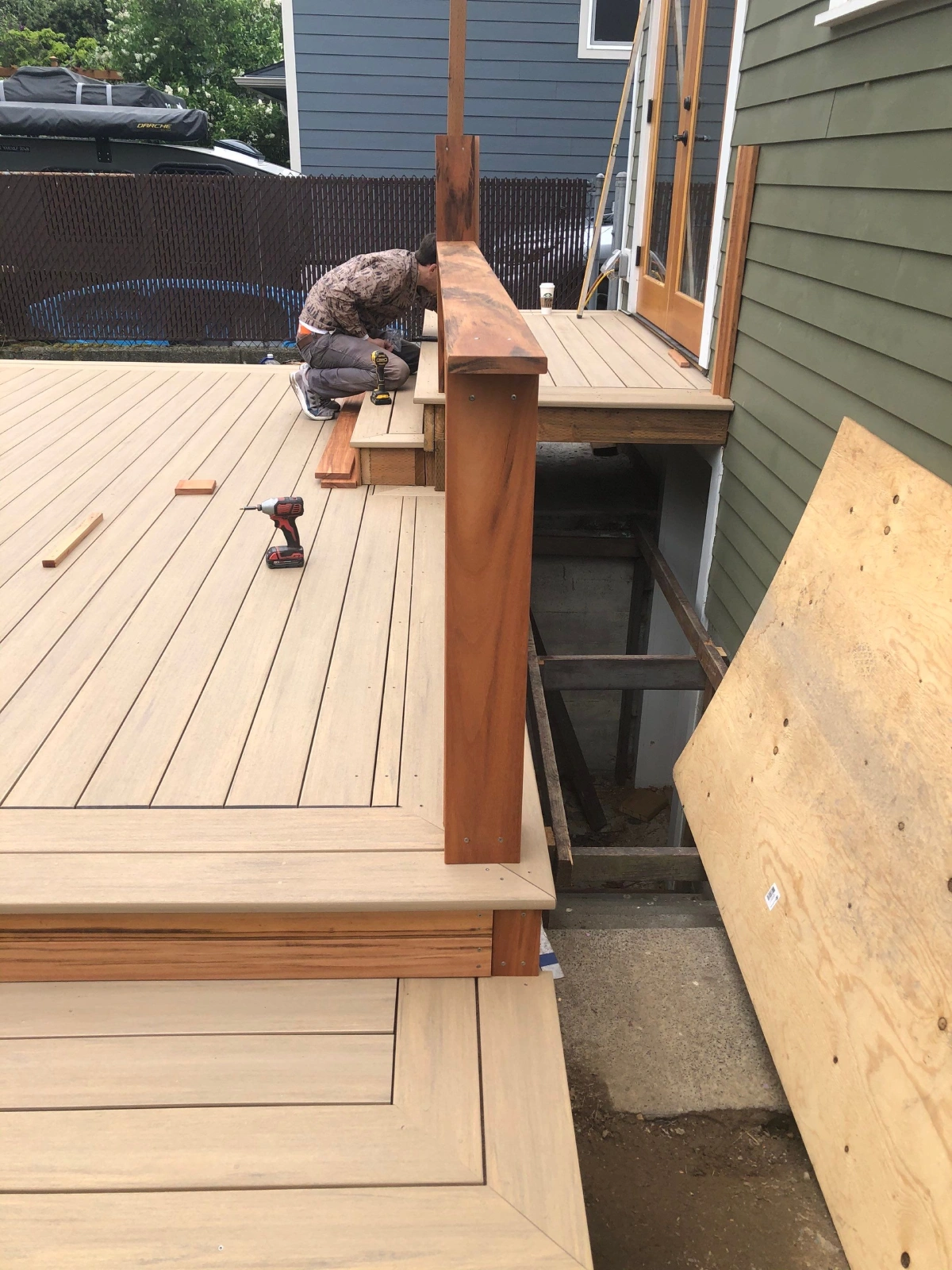
If you do decide on a deck replacement, the good news is that today’s materials and building methods are significantly better than what was available 15 or 20 years ago. Composite and PVC decking resist moisture, rot, mold, and fading without any of the maintenance headaches that come with traditional wood. Modern framing techniques and hardware create stronger, longer-lasting structures built specifically for wet climates.
You also get the opportunity to rethink your layout, add features you’ve always wanted, and upgrade to a design that fits how you actually use your outdoor space today. Many Seattle homeowners find that a deck replacement ends up being more exciting than expected once they realize they’re not just fixing a problem but creating something entirely new.
Comparing Costs
Cost is usually the deciding factor, and it’s important to look at the full picture. A targeted repair might cost a fraction of a full deck replacement upfront, making it the obvious choice when the damage is limited and the structure is sound. But if you’re facing major repairs every year or two, those costs compound quickly and often exceed what a single replacement would have cost.
A full rebuild is a larger upfront investment, but it comes with decades of low-maintenance performance, especially with composite or PVC decking. It also adds significant resale value that recurring repairs don’t. Weighing the long-term cost of repeated fixes against a one-time rebuild gives you a much clearer picture of where your money is best spent.
Making the Right Call
The smartest move is having a professional evaluate your deck’s structural integrity before committing to either path. A thorough inspection of the framing, connections, and foundation tells you whether repairs will genuinely extend the life of your deck or just delay an inevitable deck replacement. Going in with honest information saves you from wasting money on a deck that’s past the point of saving.
At Alki Decks, we help Seattle homeowners make confident decisions about deck replacement and repair. Our team evaluates your deck honestly, walks you through every option, and builds outdoor spaces designed to handle everything the Pacific Northwest throws at them. Call us today at (425) 329-5251 to schedule a consultation and get started.