

TL;DR: PVC decking contains no wood fibers, so it resists moisture differently from wood. It does not require staining or sealing, but you should still consider sun exposure, underfoot comfort, product specifications, and the overall project cost.
Before choosing PVC decking for an outdoor space in Seattle, consider drainage, how much direct sunlight the deck receives, and how you plan to use the space.
How is PVC different from composite and wood?
PVC boards contain no wood fibers, while many composite boards combine plastic with wood-based materials, and wood decking uses lumber. These differences affect moisture resistance and routine maintenance. However, the decking surface alone does not determine whether the underlying frame is sound or whether the boards suit your layout.
Wood offers natural grain and can be refinished, but it needs regular care. Composite may offer a wood-like appearance with less upkeep than wood. PVC generally needs no staining or sealing, though it still needs cleaning. Compare actual products rather than assuming all boards of one type perform alike.
Where does PVC decking fit best?
In Seattle, rain and damp debris are practical concerns. PVC boards contain no wood fibers, so they are worth considering where surfaces often stay wet. The deck still needs proper drainage, and the boards cannot protect the frame beneath. Ask how the deck will shed water and how you will keep gaps and edges clear.
Consider how you plan to use the space. A dining area needs enough room for chairs to move comfortably. If you expect to walk barefoot between the house and deck, pay close attention to the surface texture and temperature. For shaded areas, consider how you will remove leaves and debris.
What will the deck look like after you choose a board?
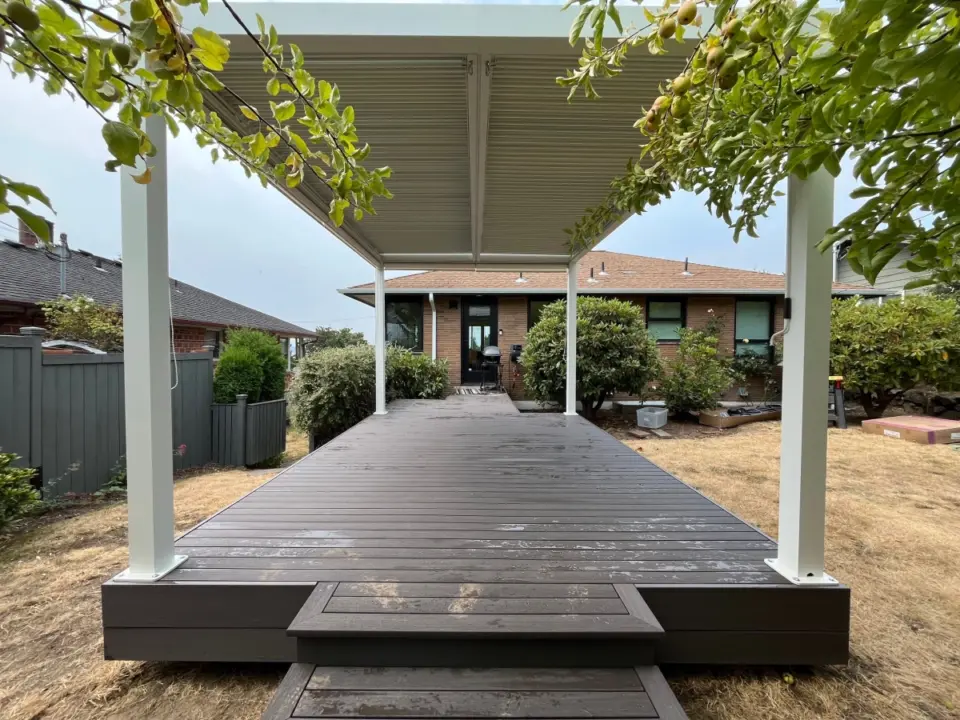
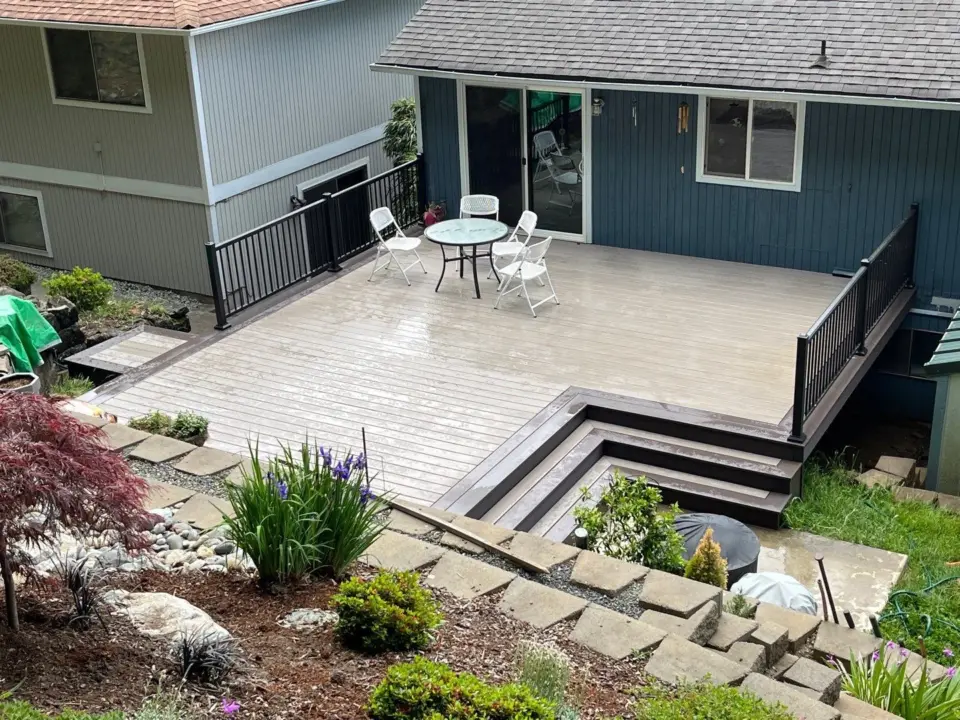
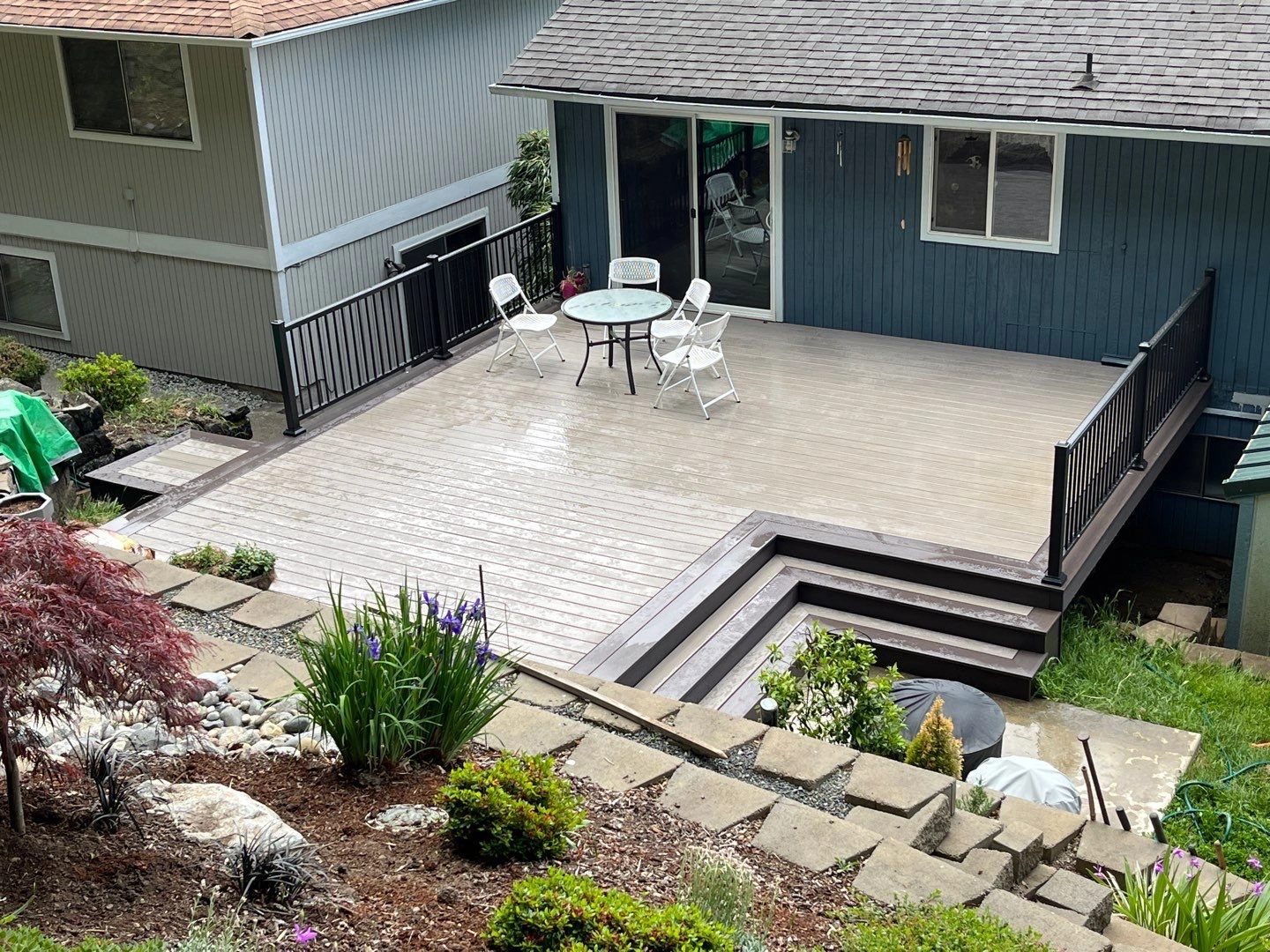
PVC decking comes in various colors and textures, including wood-grain looks. A small sample may look different across a full deck beside your siding and railing. View several boards together in daylight and shade. Check edges and stair details rather than choosing on color alone.
Ask for the exact product name and finish before you settle on a look. Availability and finish options vary; a photo of one collection is not a promise that another board will have the same texture. If the natural variation of real wood is what you like most, compare a wood sample alongside the synthetic options before deciding.
What should you check beyond the initial price?
Less maintenance does not mean no maintenance. Plan to clear debris and clean the boards according to the manufacturer’s instructions. Before choosing a product, ask for its requirements for spacing, fasteners, ventilation, and care. These details can vary even within the same brand.
Consider the entire project rather than just the cost of the boards. The condition of the framing, stairs, railing, and any necessary site work can affect the total price. Ask which items are included in the project scope and which would cost extra. Then compare the upfront cost of each material with the cleaning and maintenance you are prepared to handle.
Review the board manufacturer’s warranty, including exclusions and claim requirements. Material coverage differs from coverage for construction work. Ask why the contractor recommends a particular product for your conditions and intended use, and request the product documentation before making a decision.
Questions to take to a product meeting
Before selecting your decking, ask the contractor to clarify the product details, weight limits, and maintenance requirements. These questions can help you understand what to expect from the finished deck.
- Which board profile, edge trim, and fastening method will be visible on the finished deck?
- Does the manufacturer specify weight limits for heavy planters or grills on this decking?
- Which cleaning products does the manufacturer recommend avoiding?
Getting these details confirmed before installation can help you choose a product that suits your deck’s design, intended use, and maintenance needs.
Choose for your space, not a material label
PVC decking is worth considering if moisture resistance and reduced surface maintenance are priorities. However, if you prefer the look of natural wood, have concerns about how the boards feel in direct sunlight, or find the overall project cost too high, compare other decking options before deciding.
To discuss PVC decking for your outdoor space, call Alki Deck Builders at 425-329-5251 to explore the available options for your project.