

Seattle homeowners face a unique challenge when choosing a decking material. The city averages more than 150 rainy days per year. Moisture sits on surfaces longer, mold grows faster, and materials that absorb water break down sooner. The choice between PVC decking and wood comes down to how each material handles these conditions and how much time you want to spend on upkeep.
How PVC Decking Handles Seattle Weather
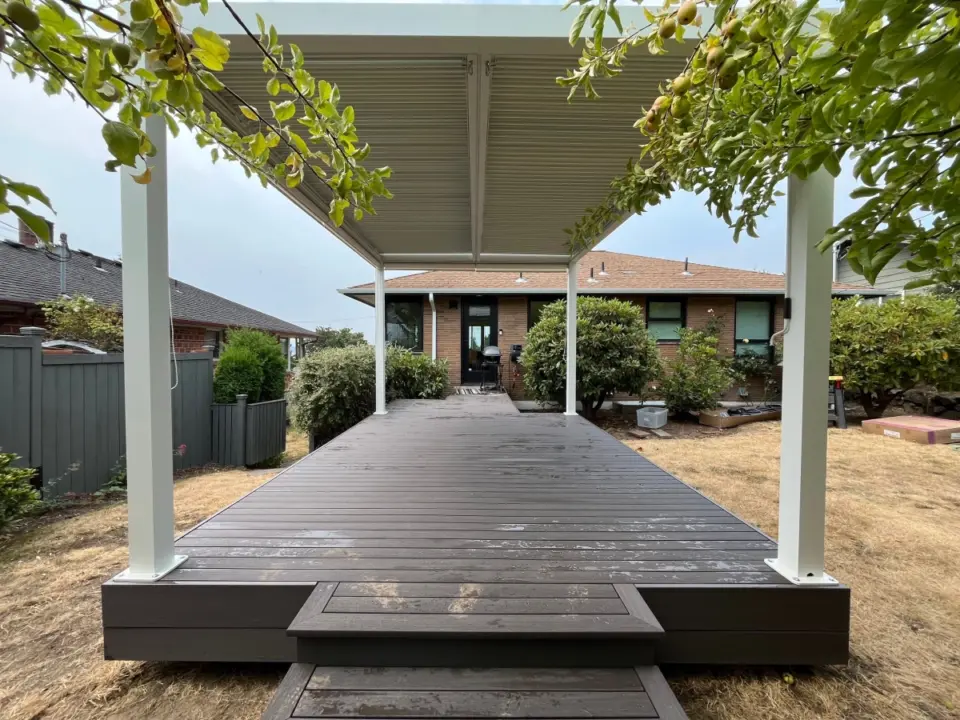
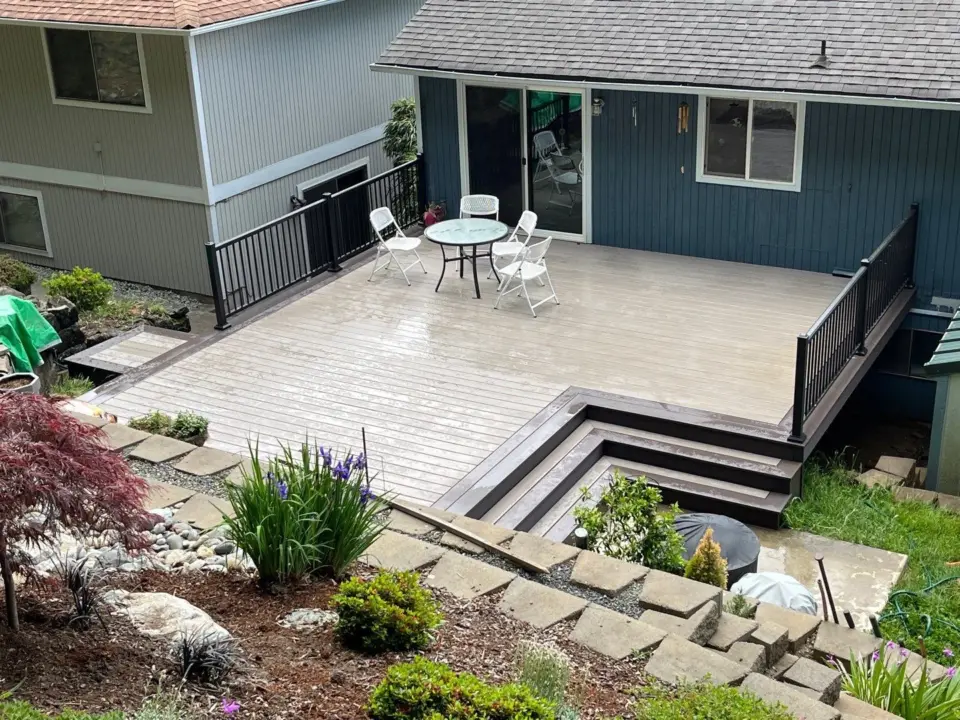
PVC decking is made entirely from synthetic polyvinyl chloride with no wood fibers. It does not absorb water at all. Rain, fog, dew, and humidity have no way to penetrate the surface.
That makes PVC decking one of the strongest performers in the Greater Seattle Area. It will not swell, warp, crack, or rot regardless of how much moisture it encounters. It also resists mold and mildew because there is no organic material for growth to feed on.
UV resistance is another advantage. When the sun does break through Seattle’s clouds, PVC decking holds its color better than most alternatives. It does not fade or dry out from prolonged exposure.
How Wood Performs in Seattle
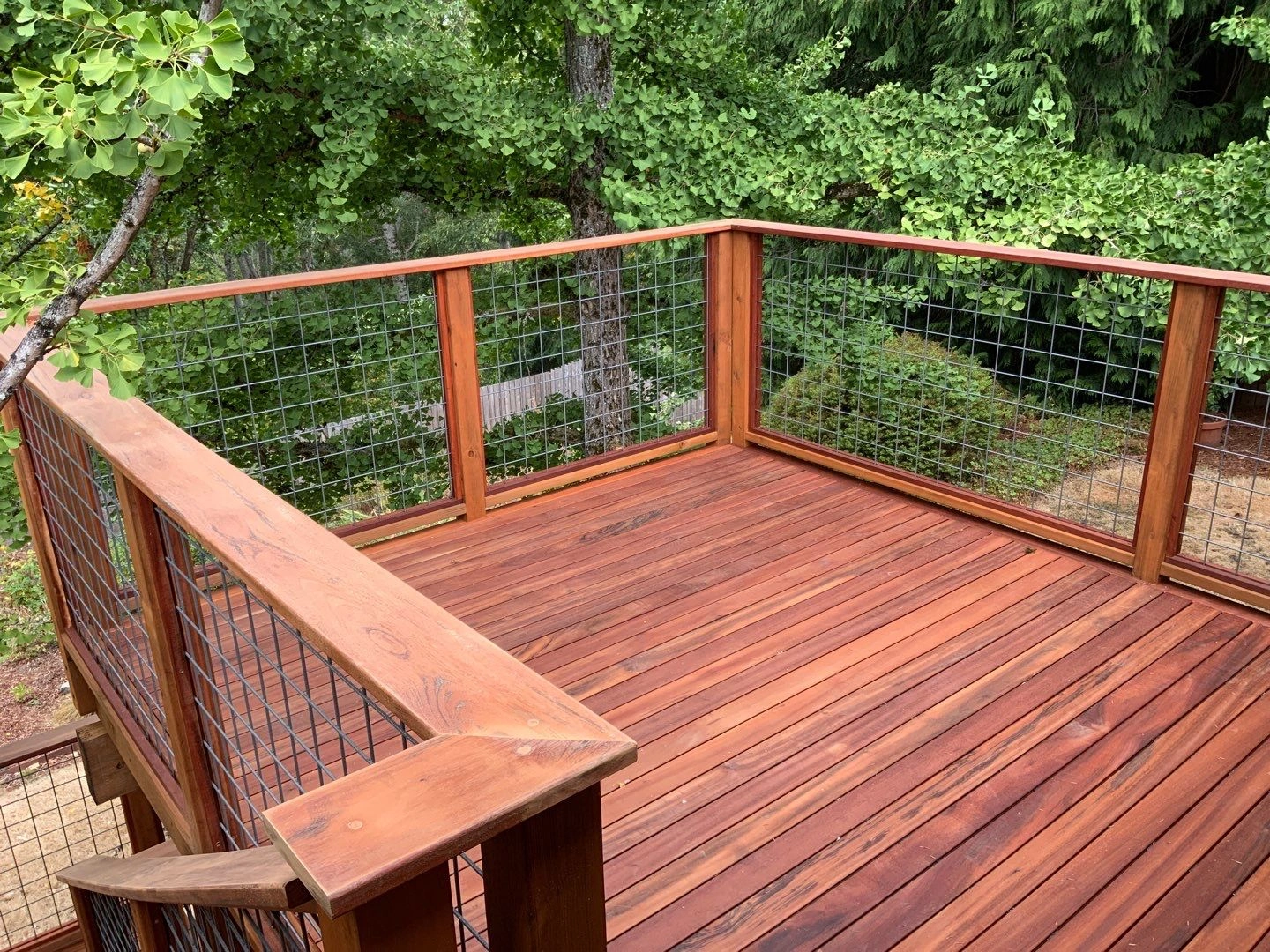
Wood decking remains a popular choice for homeowners who want a natural look and feel. Pressure-treated lumber, cedar, redwood, and exotic hardwoods like Ipe and Tigerwood all deliver a warmth and character that synthetic materials cannot fully replicate.
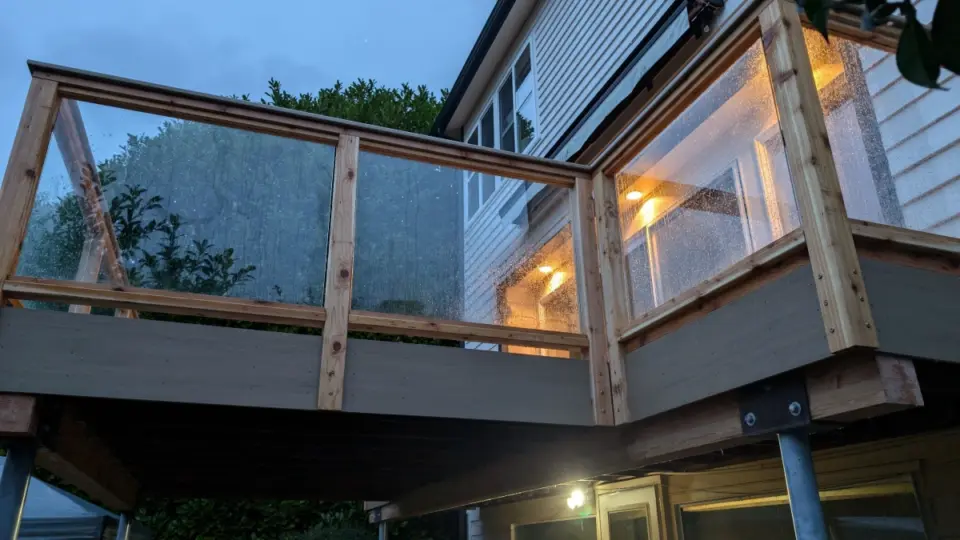
Cedar performs well in Seattle because its natural oils resist moisture and insects. Exotic hardwoods offer exceptional density and durability. Pressure-treated lumber provides the most affordable entry point and holds up adequately when maintained properly.
The trade-off is maintenance. Wood absorbs moisture. In Seattle’s climate, that means regular staining, sealing, and inspecting for mold, rot, and soft spots. Without that care, wood decking deteriorates faster than it would in a drier region.
Maintenance Comparison
This is where PVC decking separates itself. It requires no staining, no sealing, no sanding, and no painting. A periodic wash with soap and water keeps the surface clean.
Wood needs staining or sealing every one to three years depending on the species and the level of exposure. Cedar needs less attention than pressure-treated lumber but still requires regular care. Exotic hardwoods need periodic oiling to maintain their appearance.
For homeowners who would rather spend their weekends on the deck than maintaining it, PVC decking eliminates the upkeep cycle entirely.
Cost Comparison
Wood costs less upfront. Pressure-treated lumber is the most affordable option, followed by cedar, then exotic hardwoods at the premium end. PVC decking costs more to purchase and install than any wood option.
Over a 20-year span, however, PVC decking often costs less overall. The savings from eliminated staining, sealing, board replacement, and mold treatment add up significantly. For homeowners planning to stay in their home long-term, the total cost of ownership favors PVC decking.
Which One Should You Choose?
Choose PVC decking if you want maximum moisture resistance, zero maintenance, and long-term durability in Seattle’s rain-heavy climate. Choose wood if you want a natural appearance, a lower initial price, and are willing to maintain the surface regularly.
Both materials work well when installed properly by a builder who understands how the Greater Seattle Area climate affects outdoor structures.
Build With the Right Material for Your Home
The best decking material matches your budget, your maintenance preferences, and how you plan to use the space. Alki Deck Builders installs PVC decking, composite, cedar, pressure-treated, and exotic hardwood decks for homeowners across the Greater Seattle Area. Call +1 425 329 5251 to schedule a design consultation.